Showing posts with label tips. Show all posts

Tuesday, October 02, 2018

make time for creativity


I get a lot of questions sent my way about how to make time and space for creativity. So many of your have shared that you wish you had time and space to create. I've rounded up the most practical advice I can give when it comes to carving out space and a little time for making art:

Regardless of the space that you have or your daily routine, take some time to designate a place for painting and it doesn't have to big or grand- the kitchen table, a counter, a desk will all work!

Give yourself permission to be messy, creative and "in the zone" in this space.


Always keep your favorite supplies in this location (or in a couple of locations) so you don't have to go looking for them. I find when my supplies are available and within reach, I can jump right into the creative process.


Even if your space is small, try to decorate or have things around you that create a creative and peaceful atmosphere- candle, bouquet of flowers etc.


Be open to changing up your space- if life gets crazy and the only free time you have is standing in the kitchen while pasta boils- keep small projects or favorite supplies in a kitchen drawer and take 10 minutes to play while you wait for food to cook! 


Decide how much time you want to dedicate to creating and look for places in your schedule to fit that time in. .
If you don't have lots of time to dedicate to creating, try to carve out smaller chunks of time. You will be surprised how 20 minutes a day of creating adds up by the end of the week! 


Take an honest look at your life and your schedule to see if there are things that you can get rid of, move around or change. Often the biggest obstacles in having the time to create is simply time management! Taking an honest look at your schedule will help you prioritize and fit in more time for creativity. #tipsfromalisa

Friday, July 27, 2018

how I quit my job to work as an artist


Ten years ago I walked away from my day job and I never planned or imagined the evolution and growth that my tiny creative business would have. At the time, all I wanted was to earn enough income with my creativity to be able to quit my desk job. I spent years practicing, trying, failing and searching for a creative and fulfilling career as an artist. And if I am being honest, I spent a lot of time hoping for my "big break", drifting, jumping around and never fully committing to what it would really take to achieve my dream of being a working artist. But everything changed when I decided to get serious and disciplined about my dreams. I sat down and got really honest with myself and my goals and instead of waiting for something to happen, I decided to make a five year plan to quit my day job in order to work as a full time artist.

Now, five years is a long time but I was really conservative and careful about decisions at the time. Because I was working two jobs, I knew it was unrealistic to try and quit my job quickly. Instead I gave myself a lot of time to work within my life and schedule. Today I wanted to share a detailed look at what that plan looked like. My hope is that you will find a little inspiration and feel empowered to chase after your own big goals.


Identify the BIG Dream:
My giant dream was to quit my day job and work as a full time artist. At the time my husband was working his job but we also needed my income to survive. If I quit, I needed to make the same income as my day job which was $30K per year OR $2,500 per month OR about $83 per day. While this information TOTALLY overwhelmed me at the time, breaking it down into numbers is what helped me figure out a basic plan.

TIPS: Don't be afraid to talk to the people in your life about your big goal or dream. Often it is the people that know us best that can help with support, ideas, inspiration or act as a sounding board! 

Also, don't be afraid or overwhelmed by putting a price on that dream. For a good part of my life, while I was always making and selling art, I never sat down and made a budget or put a number on my goals. The day, I looked at my bills, my financial responsibilities and the income that I needed in order to quit my job, was the day that my entire plan caught fire!


Identify the things you can do to make it happen:
My goal was to work as a full time artist and create a sustainable creative business that would produce the income that I needed to survive. I knew that this goal would likely have a lot of trial and error and involve a lot of searching for the "right way" to earn that income.When I began brainstorming and planning, I discovered that I was really flexible. All I cared about was having a job or business where I was creative. Once I was grounded in this realization, I was able to make a plan that included all kinds of different options I could try. I was able to make a plan that included all kinds of different steps. Here are the big ones that I started with:
Grow and build my online shop to make more predictable revenue. 
Apply to craft/art shows during the holidays.Write a book. 
Look for paid opportunities to write articles for magazines. 
Apply to teach at art retreats. 
Look for local (paid) teaching opportunities. 
Teach my own classes and retreats. 
Teach classes online.

TIPS: Keep an open mind about the steps it takes to reach your goal! While it is great to figure them out, you can also infuse flexibility into that plan. And when (or if) things in life change, give yourself permission to change those steps and smaller goals.

I've found that writing it all down or keeping a journal really helps in the planning process. I think that we all tend to plan differently. I am not here to tell you how to go about documenting your plan. Instead I just want to encourage you to get it on paper and use it for reference. Often it's these brainstorms, outlines or written plans that can be the daily reminder that you need to stay focused on your plan.


Get realistic about the time frame it takes to reach that goal:
When I started planning, 30k per year felt like a lot of money that I needed to make as an artist in order to quit my day job! I was overwhelmed so it made sense to give myself lots of time to try different things, save money and develop my creative business into something that would be long term. This is why I settled on a five year plan for my big dream. I knew that more time meant more flexibility for trial and error and it meant having the ability to take risks. Here is what it looked like:

For my five year plan, I used year one and two as the time frame where I was experimenting, testing ideas, trying new things, creating new work, doing lots of research and "casting my net far and wide".

I used year three and four for growing and building upon the things that were working and were generating income. These are the years within my five year plan that I had the most growth because I had put in the hard work of really testing what would work for my dream.

Year five was the time when I began the process of walking away from my day job. By this time, I had exceeded my goal of generating $30k per year from my creative business. In fact, by this time I had run into the "good problem" of needing more time to put into my business which made quitting my day job a decision that made sense.


TIPS: Figuring out a time frame for your goal/dream is one of the most important things you can do when developing a plan. Having a clear understanding of the time it could take to reach a goal is going to help you get more realistic about what the steps involved in your plan.

Keep in mind that different dreams are all going to have a timeline that looks different. A five year plan for my dream made sense for my life but someone else may have only needed one year! Go easy on yourself when it comes to time. I've found that staying realistic and honest about my schedule, the amount of time I have and how much I do, has helped me become a better planner.


Thursday, May 10, 2018

the art of failure

Failure is one of those things that we often don't want to talk about- it's uncomfortable, discouraging, embarrassing and can have shame attached to it. But in a quest to try and share the good and the bad in this space, I want to tell you that I have failed WAY more times than I have succeeded in my creative/business life.

A few highlights from my journey- I got a D in color theory class in college. I've applied and been accepted to countless art fairs only to sell nothing. I've had my work hanging in galleries and yep, you guessed it, never sold anything. I've accepted jobs that looked like a dream creative position only to be faced with a terrible boss and an unhappy environment. I've signed book deals and written books that barely sold. I've created classes and products and art that flopped. I've signed licensing contracts with big companies that crashed and burned. I've been rejected, told no, hit dead ends, had my heart broken and my confidence shot more times than I care to count. 

I've been making art since I was a kid and while I've had so many amazing moments pursuing my love of art and chasing after those dreams- I've learned that for every successful opportunity or moment, there is likely a ton of failures, dead ends and hard lessons learned on the road to that success. But you know what? I wouldn't trade one single failure (well maybe I would change that D in color theory class cause honestly, I was smarter than that!) because all those failures represent WAY more to me than something to be ashamed of. They represent risks, movement, momentum and the courage to keep trying. Failure can absolutely be the best thing to happen in your life- as long as you don’t let it have power over you, it can be turned into fuel to keep trying! And the best part of failure is that success, accomplishing a dream, finding the "right" opportunities and reaching those accomplishments is so much sweeter and profound and special when it comes after the hard stuff. I can honestly say that not one accomplishment in my life goes unappreciated. From the tiny stuff to the big awesome opportunities, I am more grateful BECAUSE of all those failures came before success.

Struggling with failure? Here are some things that have helped me:
  • Keep in mind thafailure is a part of life. It doesn't mean that you are weak or incapable, it means that you are TOTALLY NORMAL!
  • While it is easy to feel fear, shame and discouragement when you fail, you have to remember that the act of trying (even if you fail) is still creating momentum toward your dreams.
  • When you let failure control you, it will keep you from trying, which means it will stand in the way of your dreams. Instead of letting failure have power over you, use as fuel to keep going.
  • Over time and lots of hindsight, I have come to realize that those moments of failure have been some of the most important learning opportunities. Typically I don't learn much when I succeed and meet goals BUT when things don't work out, I am forced to look at my life and do some soul searching.  

Tuesday, February 06, 2018

how to know when your art is finished

Something I get asked a lot is how do you know when your art is finished? I must admit that there is a method to knowing when to stop layering, stop creating and call it done. And while I don't have a magic solution, I do have a few tips that work for me:

1. I've found that it really helps to stop or push pause during the creative process. I will step away for a day or two, come back, take another look and decide if I want to keep going. I've found that taking a break and coming back gives me a fresh outlook and helps me make decisions about adding more layers or calling it done.

2. If your surface stops feeling dynamic, colorful or begins to get muddy...STOP IMMEDIATELY! It can be really easy to overwork those colors, especially when you are working in layers. If you add too much wet paint or mix too many colors, the surface will start to look muddy. This is when you need to stop, let that paint dry, go back into the surface and lighten things up by adding vibrant or contrasting colors.

3. Give yourself a number of layers to work through. For example: start with two or three layers. Try practicing this amount and then work your way up to adding more. This process can help you figure out how many layers work for you and when it feels right to stop.

4. If at any moment in your process you "fall in love" with your surface or if you are apprehensive about ruining something, this is a really good sign to stop and call it done.

Tuesday, September 05, 2017

pricing your artwork

I get asked all kinds of questions about all sorts of creative things and once in a while I take the time to answer the frequently asked questions here on my blog!

Something I get asked a lot is how to price art or handmade goods and while this process looks really different for everyone, I thought is might be helpful to give a little insight into my own philosophy on pricing that art. So pull up a chair, grab a cup of tea and join me for a little chat about art and money!


Have a question you want me to answer? Feel free to leave a comment or email me alisaburke@gmail.com


Looking for more art business tips and advice?

how to start selling your artwork- HERE

jump start a creative career- HERE


taking a leap into full time artist- HERE

coping with creative burnout- HERE

coping with failure- HERE

how to keep your work authentic- HERE

the art of chasing a dream- HERE

managing life and a creative business- HERE

the art of setting goals- HERE 

the art of blogging- HERE and HERE

the things I haven't shared- HERE

stronger than I ever knew- HERE


Thursday, August 24, 2017

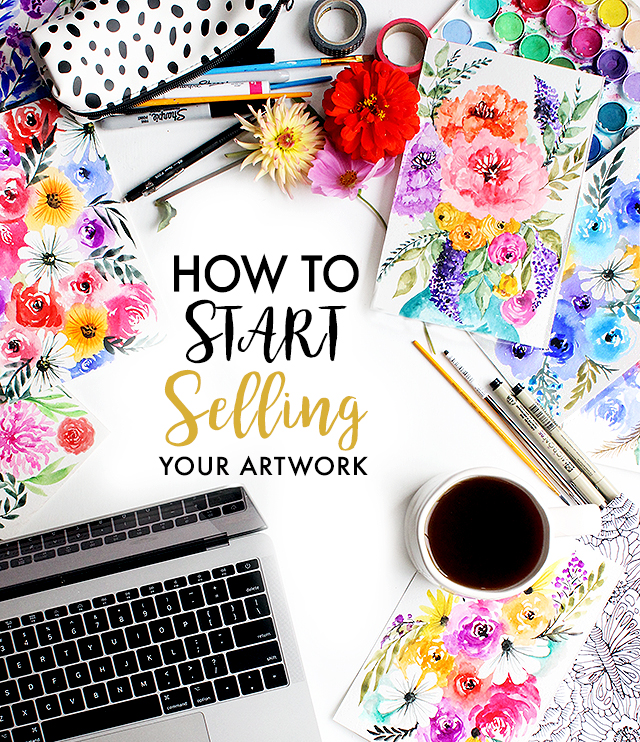
how to start selling your artwork


I get asked all kinds of questions about all sorts of creative things and once in a while I take the time to answer the frequently asked questions here on my blog!

Something I get asked a lot is how to get started selling your artwork and today I am the best advice I can give


1. BUILD A BODY OF WORK
Before you even start to think about selling your art or craft, you MUST have a good body of work! Now, this is going to look different depending on the things you create but it really helps to begin with enough art or products that look and feel like a cohesive collection that best represents you and your style.
TIPS:
Take time to develop your style before your jump into selling your art.
Be patient with this process! Taking time to really identify your style will save you the trouble of needing to change things further on down the road. 
Challenge yourself to create a collection of art or handmade items. I like to think of a collection as enough products to fill an online shop or a good amount of paintings that can be added to a portfolio. 

2. TAKE GREAT PHOTOS OF YOUR WORK
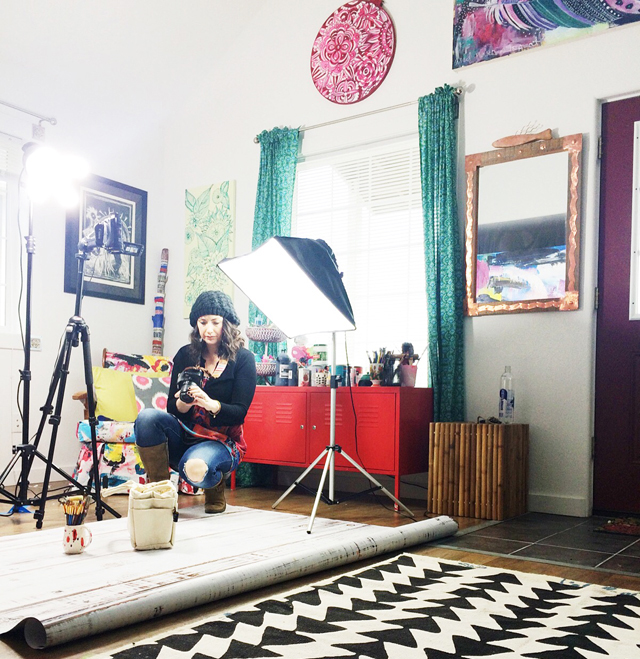
Taking great photos of your work is one of the most important ways to capture the things that make your art unique. Over time and experience, I have learned that good lighting will make all the different in a photo. My #1 rule is to always have good lighting. This means I try to use as much natural light as possible and I never use flash.
TIPS: 
Try finding a window or place that has natural light and use this spot to photograph you work. Keep in mind natural light changes over time and can be affected by weather. I like to shoot photos in front of a window with the light source at my back. 
If using natural light is not an option, then you might want to invest in some soft box lights. Having lighting will enable you to take well lit photos at any time of the day. I use these lights in my studio. 
When taking photos of products use backgrounds that are simple. I like using white butcher paper in natural light because products appear bright and crisp in photos.
3. LOOK FOR OPPORTUNITIES IN YOUR COMMUNITY TO SELL YOUR ART

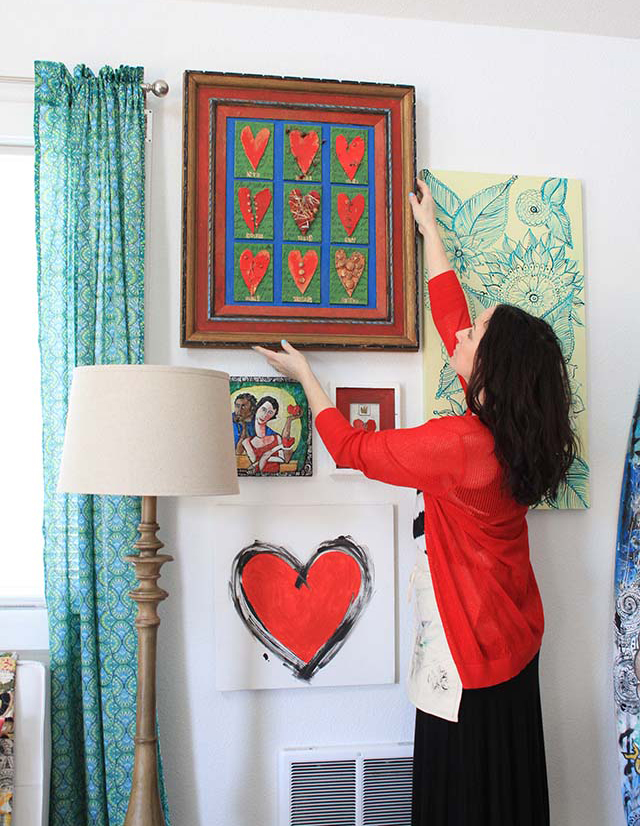
Trying to sell your work in a gallery, small boutique, craft bazaar or art festival is a great way to experiment with showing and selling your art and craft. This process can be intimidating and even scary but it can also be a valuable way to interact with the public, get instant feedback on your work and gain experience selling. While this topic could be a post in itself I want to at least share a handful of ways to get started.


CRAFT SHOWS and ART FESTIVALS:

TIPS:  
Creating stock well in advance is really important. Most customers shopping at a art festival or craft show are looking for lots of inventory to shop from. Creating a lot of products and offering variety will attract customers. 
Prepare and plan out your booth ahead of time! Different shows have different booth requirements so make sure you are aware of the required size and if there are any rules or regulations for what you can bring or set up. Laying out your booth and setting it up ahead of time (not when you show up the day of the show) will help for a smooth set up process when you arrive. 
Get creative with your booth display! Color, unique signage, interesting and ways to display our work will only help to attract shoppers into your booth.  
Have a variety of products at different price points. 
Know how to price your work. A simple formula to follow- TIME + MATERIALS= COST 
Make sure you have tags for your products, business cards, unique or fun packaging- all these things make a customer shopping at a craft show feel a little more special.  
Have a mailing list sign up available for customers to sign. 

GALLERIES:
I am going to start by saying that getting your work into galleries or even getting a solo show is can be hard and it typically isn't something that happens right away. Often you need to grow a body of work, build your portfolio, network with galleries and start small. In my experience, having worked in galleries and museums, I've found that this world is a little (dare I say) pretentious (just my opinion) and it can be a tough world to break into. But once you get your foot in the door, more opportunities can open up. Thankfully the art world is changing and these days it seems like there are more than just galleries that hang, show and sell art. Restaurants and coffee shops, even office buildings and unique stores show and sell fine art.
TIPS:  
When it comes to showing your art it often means starting small. Don't limit yourself to only looking for BIG opportunities at popular galleries- sometimes the little opportunities can lead to bigger things. 
Put together a comprehensive portfolio- digital and hard copy. This way you can email or send your work to potential contacts and opportunities. 
Always keep your portfolio updated and fresh. Add new work as you create it and try to challenge yourself to create art that could be appealing for a gallery or an art show. 
Do your research! These days galleries have websites where you can access their information and many of then even have a place to submit your work. 
Don't be afraid or discouraged by small opportunities to show or hang you work. Each of these smaller opportunities can be used to build your creative resume.
Think outside the box! Maybe you don't have galleries in your community but do you have other places and spaces that need art for their walls? Try getting creative and BRAVE and approach local businesses that might be a good fit for your work. 

RETAIL OPPORTUNITIES:
Getting your art or handmade goods into shops and boutiques is as simple as walking in and asking to speak to the manager. This method takes a lot of courage (and often a manager might not be there) so email is another great way to reach out to retail opportunities. 
TIPS: 
Made sure you understand pricing. When selling your work, retail buyers often take a percentage of your sales so you MUST be strategic when you set your prices.  
Depending on what you make, you may find that it's not profitable to sell certain products. But with a little planning you can tweak, adjust and even come up with new products so that it works for you.
Knowing your customers and where your work fits will help you find the right retail opportunities.  
Have a price list with great photos of your products all ready to go- this can be sent via email if you have inquiries about your work. 
4. CREATE AN ONLINE SHOP 
One the the quickest easiest way to sell your handmade goods (or even services) is by opening an online shop. The internet is such a great resources for connecting with customers all over the world. These days creating an online shop is super fast and easy.

TIPS: 
NAME YOUR SHOP: Some artists use their names while others will come up with a shop name. If you are naming you shop, try to choose that name carefully because it will stick with you and your business for a LONG time.
BRANDING:  Branding your shop- in other words create a look and feel that represents you- will only help you to stand out amongst all those other handmade shops. A logo, an eye catching banner, photography, the brand of your shop should look cohesive and feel like you! 
GOOD PHOTOS:  Customers browsing and shopping online typically have a short attention span and that it why good quality photos are so important when putting your work online. Photos that are good, clean and clear of visual clutter will help your shop look professional. 
BE PATIENT: Don't expect sales to happen over night! As hard as it is to accept, opening an online shop requires a lot of patience, trial and error and experimenting with marketing. 
PRICING: Take time to price your goods. Your first priority should be making a profit and as tempting as it is to keep your prices low (really low) in the long term (after time spent making, marketing, shop fees, packing and shipping), it will be worth it price things higher or at least high enough so you make a profit. 

5. UTILIZE SOCIAL MEDIA
Social media is one the easiest ways to market and spread the word about the products or services that you offer. It is also a great way to connect with other people out there. While there are all kind of ways to get creative with social networking here are the things that seem to work the best:

FACEBOOK: Facebook is a great tool for building readership, marketing your work and even building a community centered around your business and the things you share. To begin, make sure you have a facebook page. Take it it a step further and promote the things you share on your page. Anything from links to your blog posts to inspiring images, quotes, your products are all things you can share on facebook. Try not to over promote- instead try to create a place where your friends can check in and see what you have going on. I've got to be honest, I am not a big fan of facebook but for me it has helped get the word out to fans, readers and customers. Facebook has become one of many marketing tools that I lean on when I need to spread the word!
TWITTER: LIke Facebook, Twitter is another tool to spread the word. Posting links to your blog content, your online shop or your website is pretty much a no brainer but using Twitter is a great way to connect with your readers in a more personal way. Posting things that inspire you, little tid bits about your day, your creative process, your life helps your readers feel more connection to you and your everyday life. Take it a step further and follow bloggers and personalities in your industry. Tweet and retweet those people and the content that they share. This is a great way to make connections and build your community.

INSTAGRAM: Instagram is one of my favorite social networking tools. Because I love to take photos and I'd rather share something visual than come up with something to say. Connecting with customers through Instagram is a marketing tool that I utilize more than anything else.
TIPS: 
While it is great to have innovative and creative content to share often what you need more than anything is to get a good flow of regular posts, updates, links and information to share. I recommend posting at least once a day but posting more is even better. 
Engaging with your customers and audience, while time consuming, is a really easy way to connect, relate, help and interact with the people that support you! Comment back and forth, answer questions, comment on things other people share. This is a great way to understand your customers, understand what they want, connect and create a network with like minded creatives. 
Don't oversell yourself! You are welcome to disagree but there has to be more to your message and the things you share than just trying to sell, sell, sell. Try finding ways to let your customers in to your process, your personal life and your voice.

Have a question you want me to answer? Feel free to leave a comment or email me alisaburke@gmail.com


To read more about my journey as an artist-

jump start a creative career- HERE

taking a leap into full time artist- HERE

coping with creative burnout- HERE

coping with failure- HERE

how to keep your work authentic- HERE

the art of chasing a dream- HERE

managing life and a creative business- HERE

the art of setting goals- HERE 

the art of blogging- HERE and HERE

the things I haven't shared- HERE

stronger than I ever knew- HERE

Tuesday, August 22, 2017

5 things that can be used instead of a paint brush

I love painting with a brush but there is something really fun and exciting about ditching those brushes and using alternative tools and supplies for painting! Here are five of my favorite things to use instead of a paint brush.


BRAYER
A brayer is one of my favorites tools for applying paint because you have the ability to spread uniform layers of paint onto a surface. I love rolling that color onto paper or canvas when I want to quickly fill that surface with color.


PALETTE KNIFE
A palette knife can be a really fun alternative to using a paint brush! Typically a palette knife is used for mixing paint but it can also be used to apply paint. These days there are all kinds of palette knives (and even decorative scrapers) with different tips and edges that can be used in many creative ways.


FINGERS AND HANDS
One of my favorite ways to apply paint is to use my hands, my fingers and my arms.There is something so raw and powerful about using your hands to apply paint and the best part is that there are no other tools or materials that make a mark like your own hands!


ANYTHING FROM NATURE
I love using anything from nature (flowers, leaves, twigs, feathers, etc) dipped into paint to use instead of a brush. Flowers and leaves make wonderful tools to create really expressive marks and lines.

CREDIT CARD OR CARDBOARD
I LOVE using an old credit card, gift card or piece of cardboard to drag, swipe and scrape paint onto a surface. It is such a fun way to add quick, colorful and expressive layers to a painting. 

Thursday, June 01, 2017

make time to play!


Creativity is a sensitive thing. Some days it comes easy and it flows effortlessly. While other days it can feel like an uphill battle just to have an idea or make something simple. I've found that it helps to make time to play. There is something really profound about giving yourself permission to to have fun, make a mess, create something bizarre, and explore a wacky idea that has no purpose or end result. This process can break the ice and get all that inspiration flowing. Here are a few tips to inspire you to play!

CREATE FOR THE PROCESS, NOT THE OUTCOME
It is so easy to get caught up in the end result of our art and creative projects. Things like Will people like it? Will it sell? Does it look the way I planned? are all questions that can ruin creativity. I've found that tossing out the plan, the finished results and the outcome of a creative project helps me enjoy what I'm doing. Typically when I set out to play, experiment with a techniques or try something that has no purpose, I end up with all kinds of new ideas.

CHANEL YOUR INNER CHILD
You know how kids always seem to be fascinated with simple stuff? Or how they seem to not care at all about being silly? Or how new experiences are so exciting? Well, these are all things that I try to embrace when it comes to creativity. I'm always trying to find ways to get back to all that creative innocence I had when I was a kid. Things like finger painting, doodling, painting on the wall, cutting up magazines, and coloring are all ways that I am able to channel my inner child.

TRY SOMETHING NEW
There is nothing that will set you free quite like trying a new technique, new supply or a new idea. I've found that I "play" the most when I have something new or different to experiment with. Again, there is something about dropping expectations of a finished project and embracing the process (of something new) that gets that inspiration flowing.

Tuesday, February 28, 2017

tips for finding your creative style


finding your style from Alisa Burke on Vimeo.


WHY DO YOU CREATE

why do you create from Alisa Burke on Vimeo.


WHO OR WHAT ARE YOUR INFLUENCES
influences from Alisa Burke on Vimeo.


WHAT ARE YOU DRAWN TO VISUALLY

what are you drawn to visually from Alisa Burke on Vimeo.


WHAT ARE YOUR FAVORITE WAYS TO CREATE 
favorite ways to create from Alisa Burke on Vimeo.


GATHER INSPIRATION

gather inspiration from Alisa Burke on Vimeo.


PUT YOUR TWIST ON IT


put your twist on it from Alisa Burke on Vimeo.


PRACTICE


practice from Alisa Burke on Vimeo.


BE OPEN TO CHANGE

be open to change from Alisa Burke on Vimeo.

LinkWithin

Related Posts with Thumbnails